
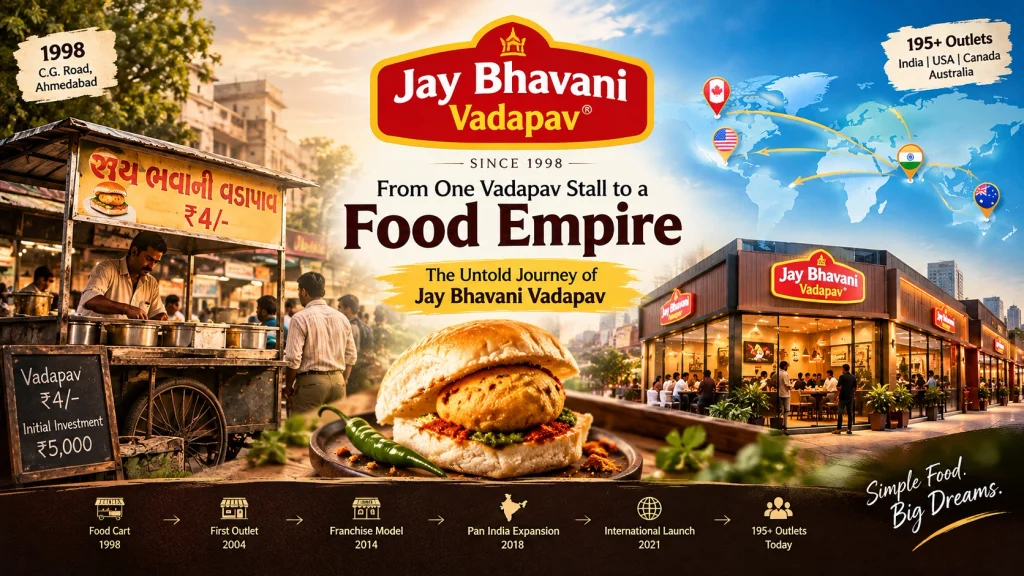
Discover the inspiring journey of Jay Bhavani Vadapav — from a small food cart on C.G. Road in Ahmedabad, to a growing Indian fast-food brand with outlets now spread across India and international markets.
Today, when people think of popular Indian fast food, Vadapav is one of the first things that comes to mind. It’s simple, affordable, and full of flavour. But behind every successful food brand lies a story of hard work, risk, and persistence. The story of Jay Bhavani Vadapav is exactly that kind of entrepreneurial journey.
Quick Facts
- Founded: 1998, Municipal Market, C.G. Road, Ahmedabad
- Initial Investment: ₹5,000
- Starting Price: ₹4 per Vadapav
- Today: 195+ outlets across India, USA, Canada, and Australia
- Founders: Kishan Singh Rajput and his three brothers
The brand traces its beginning to 1998 in Ahmedabad, when four brothers from Rajasthan entered the food business with limited resources and a simple idea: serve a delicious Vadapav to Ahmedabad’s growing street-food audience. According to the company’s official history, the first food cart was started at Municipal Market on C.G. Road, with an initial capital investment of ₹5,000, selling Vadapav for ₹4.
What started as a small cart eventually grew into a multi-location food brand. This journey is a powerful example of how a simple product, combined with consistency, customer understanding, and business vision, can grow far beyond its humble beginnings.
The Beginning of Jay Bhavani Vadapav
Four Brothers and One Big Dream
The story actually goes back to 1994, when four brothers from Rajasthan’s Mewar region came to Ahmedabad in search of a livelihood.
Ahmedabad offered an environment where affordable snacks and street food were already deeply woven into everyday life. The brothers noticed the growing popularity of Vadapav and spotted an opportunity. Instead of starting with an expensive restaurant, they chose a much simpler model.
The First Food Cart on C.G. Road
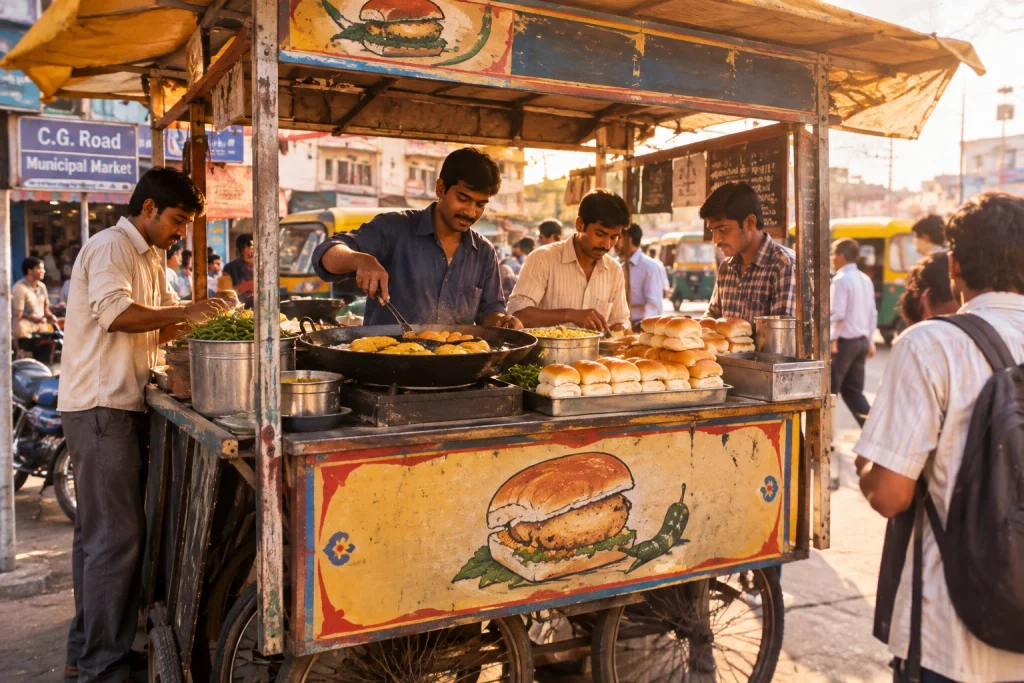
In 1998, the brothers set up their first food cart at Municipal Market, C.G. Road.
They reportedly began with only ₹5,000 in capital, selling Vadapav for around ₹4 per piece. There was no large restaurant, no nationwide advertising campaign, no massive team — just a food cart, a recipe, and the determination to build something.
The First Entrepreneurial Lesson
The early journey of Jay Bhavani teaches an important entrepreneurial principle: you don’t always need a large investment to start a business. A business can begin small if the product solves a genuine customer need. For Jay Bhavani, that need was simple — affordable, tasty, and convenient food.
Why Vadapav Was the Perfect Product
Vadapav may look like a simple street-food item, but its simplicity is its greatest strength. It is:
- Affordable
- Quick to prepare
- Easy to carry
- Filling
- Suitable for students and working people
- Easy to sell in high-footfall locations
For a food entrepreneur, these qualities create a strong business opportunity. But selling Vadapav once is easy — building a brand around it is much harder. The real challenge is making customers return again and again, which requires taste, consistency, speed, quality, and customer trust.
From Food Cart to First Outlet
The business gradually moved beyond the original cart.
2004: The First Jay Bhavani Outlet
In 2004, according to the company’s official timeline, what had started as a roadside cart evolved into Jay Bhavani Vadapav’s first outlet, near GLS College in Ahmedabad.
This was an important turning point. A cart and a permanent outlet operate very differently. A proper outlet made it possible to:
- Serve more customers
- Build stronger brand recognition
- Create a consistent customer experience
- Expand the menu
- Establish a recognizable identity
The business was no longer just selling Vadapav — it was beginning to build a brand.
Jay Bhavani Vadapav’s Expansion Journey
2008: The Turning Point in Ahmedabad
One of the important moments in Jay Bhavani’s history came in 2008. The company’s official story identifies Kishan Singh Rajput, one of the four brothers, as opening an outlet in Anand Nagar. The company describes this move as pivotal in the brand’s development, helping establish a stronger presence in Ahmedabad.
Why Location Matters in the Food Business
2012: Expansion Across Ahmedabad
Following the success of the Anand Nagar outlet, the company expanded further. In 2012, Jay Bhavani opened additional outlets in Bopal, Bodakdev, Vastrapur, and Gurukul, according to its official timeline.
This stage marked a shift from a single-location food business toward a larger operating model. The challenge now became bigger: how do you maintain the same customer experience as you open more outlets?
The Challenge of Consistency
A customer visiting one outlet expects the food to taste the same at another. This means a growing food chain needs strong systems for:
- Ingredients
- Recipes
- Preparation
- Staff training
- Hygiene
- Service
- Quality control
Without consistency, a brand can lose the trust it spent years building.
The Franchise Model: A Major Step Toward Scale
2014: Entering the Franchise Model
Another major milestone came in 2014, when Jay Bhavani transitioned its company-owned outlet in Palanpur to a franchise for the first time.
Franchising allows a food brand to expand more quickly by working with business partners who operate individual outlets under the established brand. For the parent company, this creates opportunities for faster geographic expansion. For franchise partners, it provides access to an existing brand, menu, and operating system.
Franchise Growth Comes With Responsibility
Expansion isn’t simply about opening more stores. A food brand must protect its Taste + Quality + Service + Brand Identity.
If these elements remain strong, expansion strengthens the brand. If they decline, rapid expansion can become a weakness.
Professionalizing the Business
2015: The Professional Expansion
In 2015, the company states that a team of professionals joined the organization to help take the Jay Bhavani Vadapav brand to the next level.
This reflects another important stage in a growing company’s life. In the beginning, founders often handle almost everything themselves. As a business grows larger, professional teams become increasingly important, working across areas such as:
- Operations
- Marketing
- Finance
- Human resources
- Franchise management
- Supply chain
- Business development
A business that once depended mainly on its founders must eventually build systems that allow it to operate at scale.
Going Beyond Gujarat
2018: Expansion to Rajasthan
One of the biggest milestones came in 2018, when Jay Bhavani Vadapav expanded beyond Gujarat. The company’s official timeline states that it opened its first out-of-state outlet in Rajasthan — described as its 101st location.
This was more than just another outlet. It showed that the company believed its food concept could work outside its original home market.
From Ahmedabad to a Wider Market
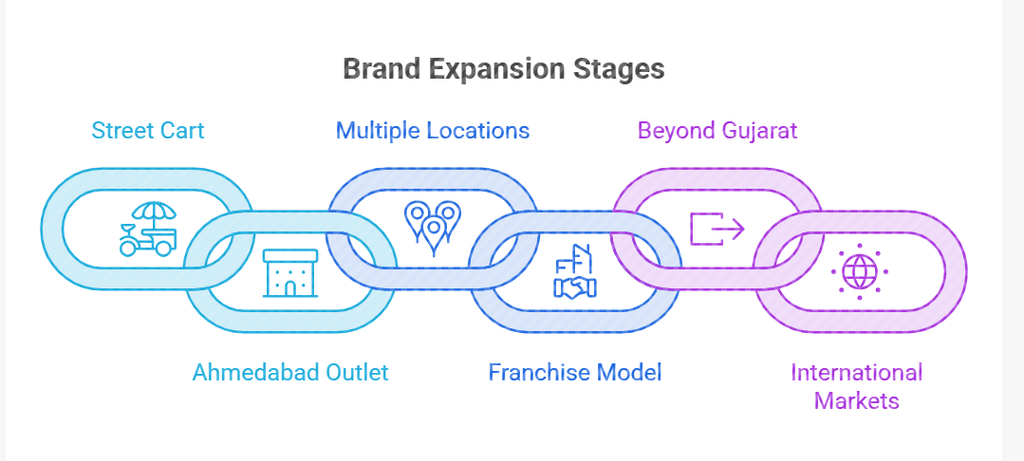
The expansion story can be understood as a series of stages:
Street Cart → Ahmedabad Outlet → Multiple Ahmedabad Locations → Franchise Model → Beyond Gujarat → International Markets
This gradual progression is one of the most interesting aspects of the brand’s journey.
From Indian Street Food to Global Ambition
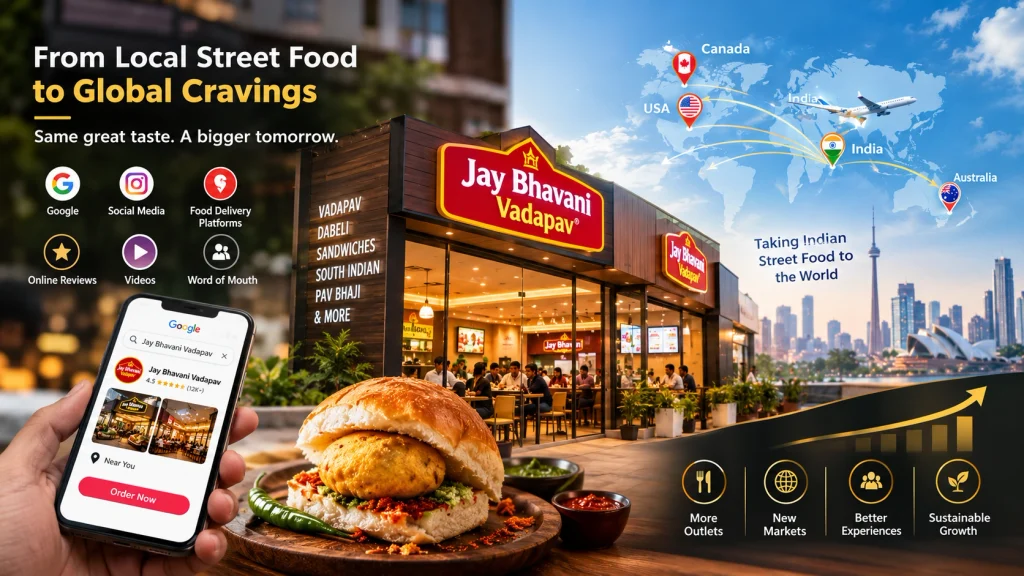
Jay Bhavani’s current official website describes the brand as having expanded internationally, with outlets across India, the USA, Canada, and Australia. The website currently states 195+ outlets.
The company’s website also presents a menu that goes well beyond Vadapav, including Dabeli, sandwiches, South Indian food, Bhaji Pav, Pulav, Chinese items, French fries, milkshakes, and fresh juices.
This shows how the original Vadapav concept has evolved into a broader fast-food offering.
More Than Just a Vadapav Brand
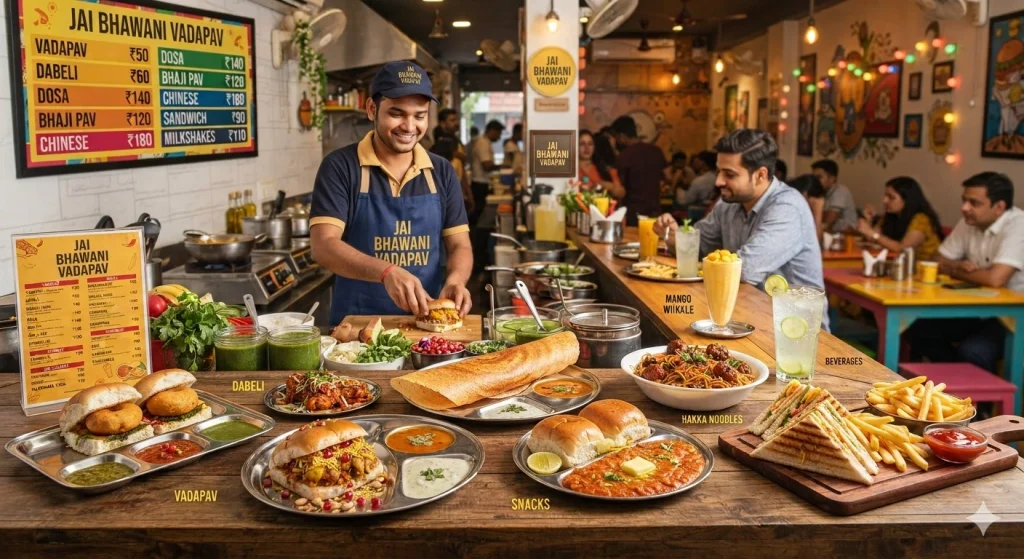
One reason food brands expand their menus is to serve customers with different preferences. Vadapav remains the signature product, but a broader menu attracts customers looking for something different.
Menu Strategy
Jay Bhavani’s current menu includes several categories, such as:
Vadapav — the product at the heart of the brand
Dabeli — another popular Indian street-food favourite
Sandwiches — a familiar fast-food option for variety-seekers
South Indian Food — items like dosa expand the menu into a new category
Chinese Food — additional variety for customers
Snacks — Bhaji Pav and French fries complement the core menu
Beverages — milkshakes and fresh juices round out the offering
This diversification helps a food brand appeal to families, students, office workers, and groups with different food preferences.
How Jay Bhavani Vadapav Scaled Its Business
Location Strategy
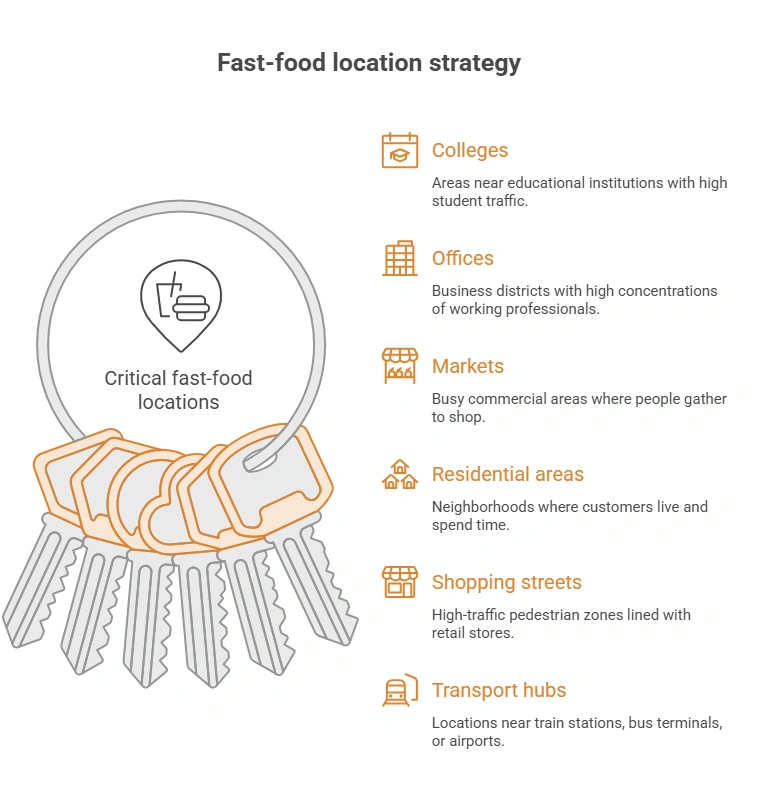
Food businesses depend heavily on accessibility and customer footfall. Locations such as colleges, offices, markets, residential areas, and shopping streets give businesses access to different customer segments. Jay Bhavani’s expansion across locations shows how much geography matters in food-business growth.
Product-Market Fit
The original product was simple. Vadapav was already familiar to customers, affordable, and convenient. Instead of introducing a completely unfamiliar product, the business built around an existing customer demand.
Standardization and Quality Control
As a food business grows from one location to multiple outlets, maintaining consistency becomes increasingly important. The business needs systems around ingredients, recipes, preparation, hygiene, staff training, customer service, and quality control.
Franchise-Based Expansion
Franchising provides a scalable model for geographic expansion. However, franchise growth also requires strong systems, training, quality control, and brand management.
Business Lessons From Jay Bhavani Vadapav’s Success
Lesson 1: Start Small, But Start
The business began with a small cart and limited capital. Entrepreneurs often wait for the perfect opportunity, but starting small allows a business idea to be tested in the real market.
Lesson 2: Understand Your Customers
The founders identified an existing demand for Vadapav in Ahmedabad. Instead of educating customers about an entirely new product, they entered a market where people already understood and enjoyed the food.
Lesson 3: Build Consistency
A recognizable food brand depends heavily on consistent taste and quality. As the number of outlets grows, consistency becomes even more important.
Lesson 4: Expand Step by Step
Jay Bhavani’s timeline shows several stages of expansion rather than an immediate jump from one stall to a nationwide business:
Food Cart → First Outlet → Ahmedabad Expansion → Franchise → Other States → International Markets
Lesson 5: Build Systems Before Scaling
Once a company grows beyond a few outlets, systems become essential. Franchising, professional teams, and operational processes help a brand manage larger-scale growth.
Lesson 6: Diversify Without Losing the Core Product
A strong brand can expand its product range while continuing to maintain its signature offering. For Jay Bhavani, Vadapav remains central to the brand while the broader menu creates additional options for customers.
The Entrepreneurial Story Behind the Food
At the center of the Jay Bhavani journey is Kishan Singh Rajput, identified by the company’s current website as its Managing Director.
The company’s LinkedIn profile describes him and his three brothers as the co-founders of Jay Bhavani Vadapav in 1998.
Their journey is an example of immigrant entrepreneurship within India: four brothers came from Rajasthan to Ahmedabad seeking livelihood and eventually built a food business around a product they saw growing in popularity.
That makes the story bigger than Vadapav — it’s a story about observation, opportunity, and persistence.
What Makes Jay Bhavani Vadapav’s Journey Interesting
The most interesting part of the Jay Bhavani story isn’t simply the number of outlets — it’s the progression.
The company started with limited resources and gradually built a larger organization. Its journey demonstrates several important business principles:
- Start with a practical business model
- Understand existing customer demand
- Build customer trust
- Focus on consistency
- Expand gradually
- Develop systems
- Build professional teams
- Use franchising carefully
- Diversify the product offering
- Explore new geographic markets
The Future of Jay Bhavani Vadapav
The food industry is changing rapidly. Customers today discover restaurants through:
- Social media
- Food-delivery platforms
- Online reviews
- Videos
- Word of mouth
Food brands therefore need to compete not only on taste but also on visibility, convenience, and customer experience. Jay Bhavani’s international expansion indicates ambitions beyond its original Ahmedabad market. Its official website says the company is taking Indian street food to global destinations.
The Challenge of Scaling Further
The next stage of growth will depend on maintaining the qualities that made the original business successful, while adapting to new markets.
For a growing food brand, the challenge isn’t simply opening more outlets — it’s maintaining Taste + Quality + Service + Customer Trust + Brand Identity.
Conclusion
Jay Bhavani Vadapav’s story isn’t just a food-brand success story — it’s a reminder that every big business starts with a small, brave first step. From a ₹5,000 cart to 195+ outlets, Kishan Singh Rajput and his brothers have shown that if you believe in your product, focus on consistency, and make the right decisions at the right time, even a simple street-food item can become a global brand.
Next time you bite into a Vadapav, remember — it isn’t just a snack, it’s a symbol of an entrepreneurial journey.
FAQs — Frequently Asked Questions About Jay Bhavani Vadapav
When did Jay Bhavani Vadapav start?
Jay Bhavani Vadapav began in 1998, according to the company’s official history.
Where did Jay Bhavani Vadapav start?
The first food cart was started at Municipal Market, C.G. Road, Ahmedabad.
How much capital was used initially?
The company’s official history states that the initial capital investment was ₹5,000.
Who founded Jay Bhavani Vadapav?
The company identifies Kishan Singh Rajput and his three brothers as the co-founders.
What was the first product of Jay Bhavani Vadapav?
Vadapav was the core product when the business beg