
Every clothing brand starts with an idea, but Hemmlock started with something more meaningful — the belief that clothing should make people feel confident, comfortable, and truly themselves.
Hemmlock is a clothing brand built around modern fashion, everyday comfort, and a strong sense of personal style. The idea behind the brand is simple: create clothing that looks good, feels comfortable, and fits naturally into the lifestyle of today’s generation. From the beginning, Hemmlock has focused on bringing together style, quality, and individuality. Rather than simply following every fashion trend, the brand aims to create pieces that people can wear with confidence and make their own — whether it’s a casual day out, meeting friends, or simply enjoying everyday life
What makes the journey interesting is that Hemmlock is not just about selling clothes. It is about building a brand that people can connect with. Every design, every collection, and every idea reflects the ambition to create something fresh while staying true to the people who wear it. As Hemmlock continues to grow, its story is still being written — with new ideas, changing fashion, and a growing community, the brand is moving forward with one simple goal: to make everyday fashion feel more personal, comfortable, and confident.
And perhaps that is what makes Hemmlock more than just a clothing brand — it is a story that people can wear.
The Beginning of Hemmlock
The first stage of every entrepreneurial journey is identifying an opportunity. Before a business becomes a recognizable brand, there is usually a much smaller beginning — a problem, an idea, a conversation, or an ambition to create something different. The foundation of a business is generally built around creating value for a specific group of customers while developing a sustainable business model.
At the beginning, businesses usually have limited resources, and founders often have to manage several responsibilities themselves — product development, sales, marketing, customer relationships, finance, and operations. This early stage is extremely important because it establishes the foundation on which future growth can be built.
Identifying the Market Opportunity
One of the most important questions for any entrepreneur is: What problem am I solving? A successful business needs customers who have a reason to choose its product or service — which means understanding customer expectations and identifying areas where existing businesses may not be providing enough value. Hemmlock’s development can therefore be understood through three basic elements: customer need, business opportunity, and a solution capable of creating value. Once these three come together, the next challenge is execution.
From Idea to Business
Turning an idea into a functioning business requires planning around key questions:
- What will the business offer?
- Who are the target customers?
- How will products be delivered?
- How will the business generate revenue?
- What makes the brand different?
- How will customers discover the company?
- How will it maintain quality and grow sustainably?
These questions form the foundation of a business model. For Hemmlock, the early period can therefore be understood not simply as launching a business, but as developing a foundation capable of supporting future growth.
Founder, Owner and CEO
Behind every growing company are people responsible for making important decisions, and the founder is particularly important because their original vision often influences the company’s direction. In the early stages, founders commonly get involved in almost every part of the business — developing the initial concept, understanding customers, building the first team, managing finances, developing products, creating the brand, finding customers, establishing partnerships, and making strategic decisions.
Sanjay Agarwal — The Vision Behind the Brand

Behind every growing business is a person willing to take the first step. For Hemmlock, that journey is connected with Sanjay Agarwal, whose entrepreneurial vision helped shape the idea of building a clothing brand with a clear focus on style, quality, and customer expectations.
Starting a business is never completely predictable — there are questions about customers, competition, products, investment, and the future. Like many entrepreneurs, Sanjay Agarwal’s journey with Hemmlock represents the process of turning an idea into a business through planning, decision-making, learning, and continuous improvement. The journey began with the vision of creating something meaningful in the clothing industry. Instead of looking at clothing simply as a product, Hemmlock was developed around the idea of creating a brand that people could connect with and feel confident wearing, building the business meant understanding the market, thinking about customer preferences, developing products, and creating a strong identity — each step requiring patience and the willingness to adapt as the business evolved.
“Every successful brand begins with a vision, but it grows through consistent effort.”
Owner and CEO
For Hemmlock, the roles of Founder, Owner, and CEO come together in one person — Sanjay Agarwal. This makes his role in the business especially important because he is not only connected to the original idea behind Hemmlock but is also involved in taking that vision forward as the owner and leading the business as its CEO.
As the founder, Sanjay Agarwal represents the starting point of Hemmlock’s journey — the person behind the idea of building a clothing brand and turning that idea into a real business. As the owner, he has a direct stake in the company’s growth and long-term success. And as the CEO, his responsibility goes beyond ownership — it involves making important business decisions, guiding the company’s direction, understanding the market, and working toward the brand’s future.
Being the founder and CEO of the same company also means the original vision can remain closely connected with everyday business decisions — from thinking about customers and products to understanding competition and planning future growth, all of which require a practical understanding of how the business is developing.
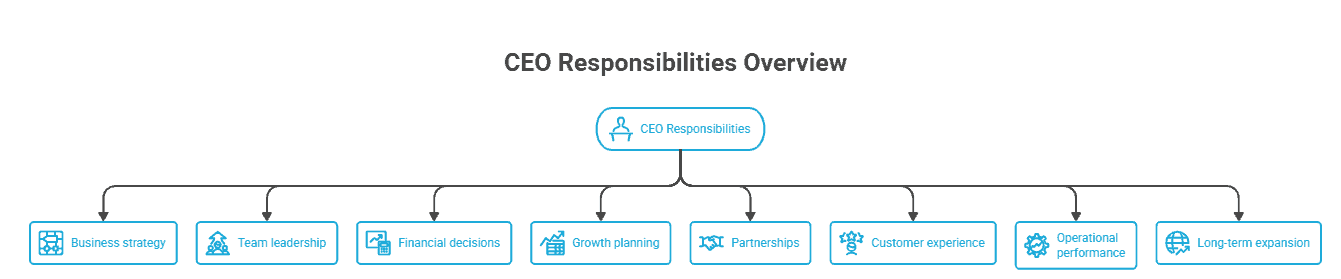
Leadership and Vision
Running a growing clothing brand requires more than simply having a good idea. Fashion trends change, customer expectations evolve, competitors enter the market, and digital platforms continue to influence how people discover and buy products.
As the person leading Hemmlock, Sanjay Agarwal’s role is therefore closely connected with both vision and execution — the challenge is to maintain the identity and values that helped shape the brand while also being open to new ideas and changes in the market.
This combination of founder, owner, and CEO gives Sanjay Agarwal a unique position within Hemmlock — connected to where the company started, responsible for its ownership, and involved in thinking about where the brand can go next.
Ultimately, the journey of Hemmlock is not only about building a clothing business. It is also about how one founder’s vision can develop over time into a brand, a team, and a growing business.
Early Challenges and Turning Points
Starting a business is exciting, but it is rarely easy. Most entrepreneurs face early-stage challenges involving finance, customers, employees, competition, operations, technology, marketing, supply, and business planning, and for a growing company like Hemmlock, this would require careful decision-making, experimentation, and continuous improvement.
Building Customer Trust
A new company does not automatically have customer trust. Customers may already have relationships with established competitors, so convincing them to try a new brand requires strong communication, quality, consistency, and customer service — building trust takes time.
Creating Brand Awareness
Another major challenge is getting people to recognize the brand. Even an excellent product can struggle if potential customers don’t know the company exists — which makes marketing and communication extremely important.
Managing Competition
Almost every attractive market eventually becomes competitive. Competitors may have lower prices, similar products, larger distribution networks, greater brand recognition, bigger advertising budgets, and more established customer relationships, so a growing company needs to understand its competitive advantage and communicate it clearly.
Managing Growth
Growth can create its own problems. When customer demand increases, a business needs sufficient employees, inventory, technology, capital, and systems to handle the additional workload — poorly managed growth can negatively affect the customer experience.
Important Turning Points
A business journey usually includes moments that significantly change its direction, such as launching a major product, entering a new market, opening a new location, hiring a larger team, developing an online presence, receiving investment, building an important partnership, or expanding its customer base. The most important verified milestones in Hemmlock’s journey should be presented chronologically so readers can clearly see how the company developed from its initial stage to its current position.
Hemmlock’s Business Model
A business model explains how a company creates value for customers and converts that value into revenue — understanding it is one of the most important parts of understanding a company.
Products and Services
Hemmlock’s primary offering should be clearly explained here. The company creates value by providing customers with products designed to address specific needs. A strong offering should answer one basic question: Why should a customer choose this business instead of another option?
Target Customers
Every business needs to understand exactly who it serves, described through factors like age, location, income, interests, purchasing behavior, lifestyle, and customer problems — understanding the target customer helps a company make better decisions on products, pricing, advertising, and communication.
Revenue Generation
Businesses can generate revenue through channels such as direct sales, online sales, services, subscriptions, partnerships, wholesale, distribution, and other commercial channels, and the revenue model needs to be sustainable enough to support future operations and growth.
Customer Journey
A typical customer journey moves through five stages:
Awareness → Interest → Consideration → Purchase → Retention
Customers first discover the brand, then compare it with alternatives, then purchase — after which the company’s goal is to provide a positive experience so the customer returns, which is why customer retention can be just as important as customer acquisition.
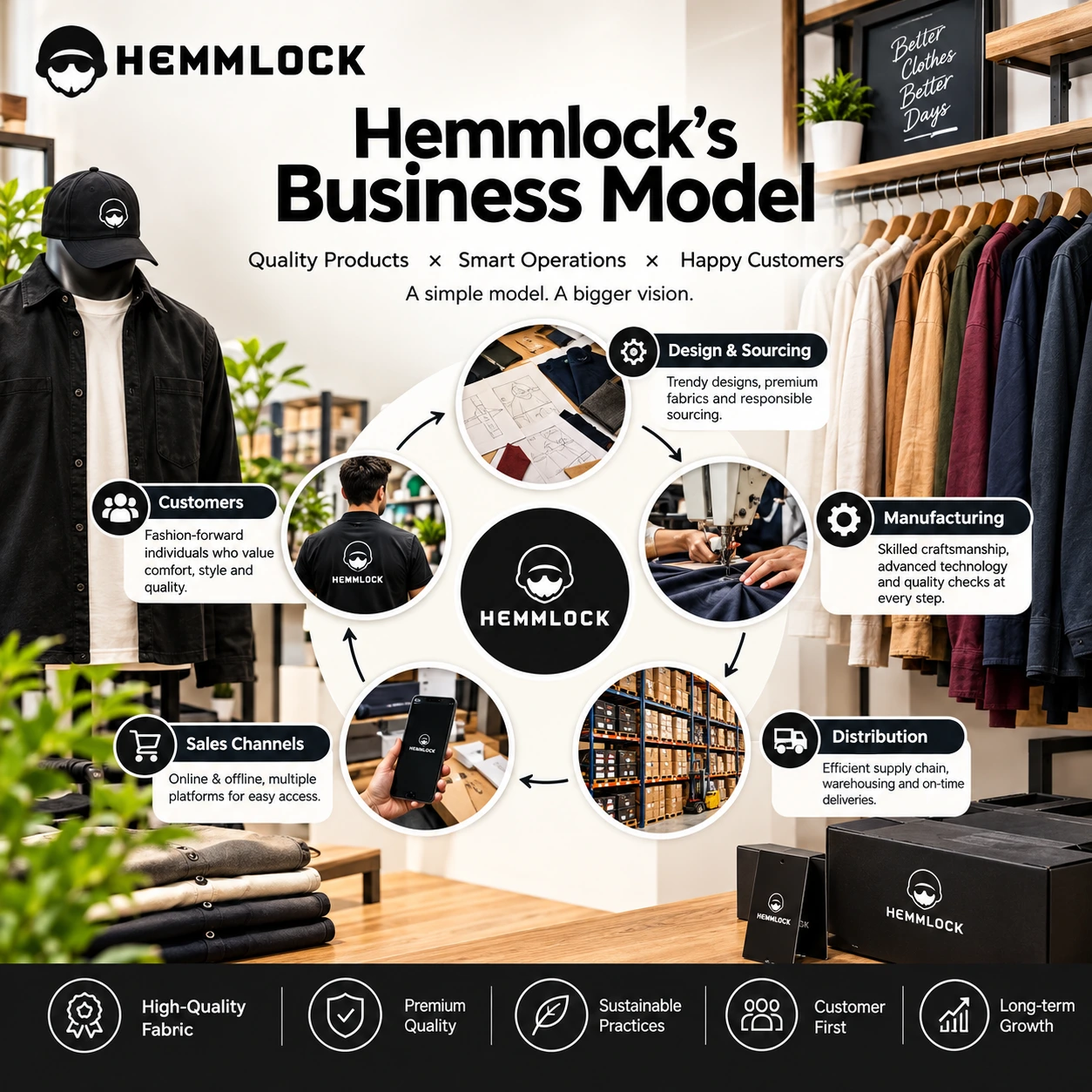
How Hemmlock Works Today
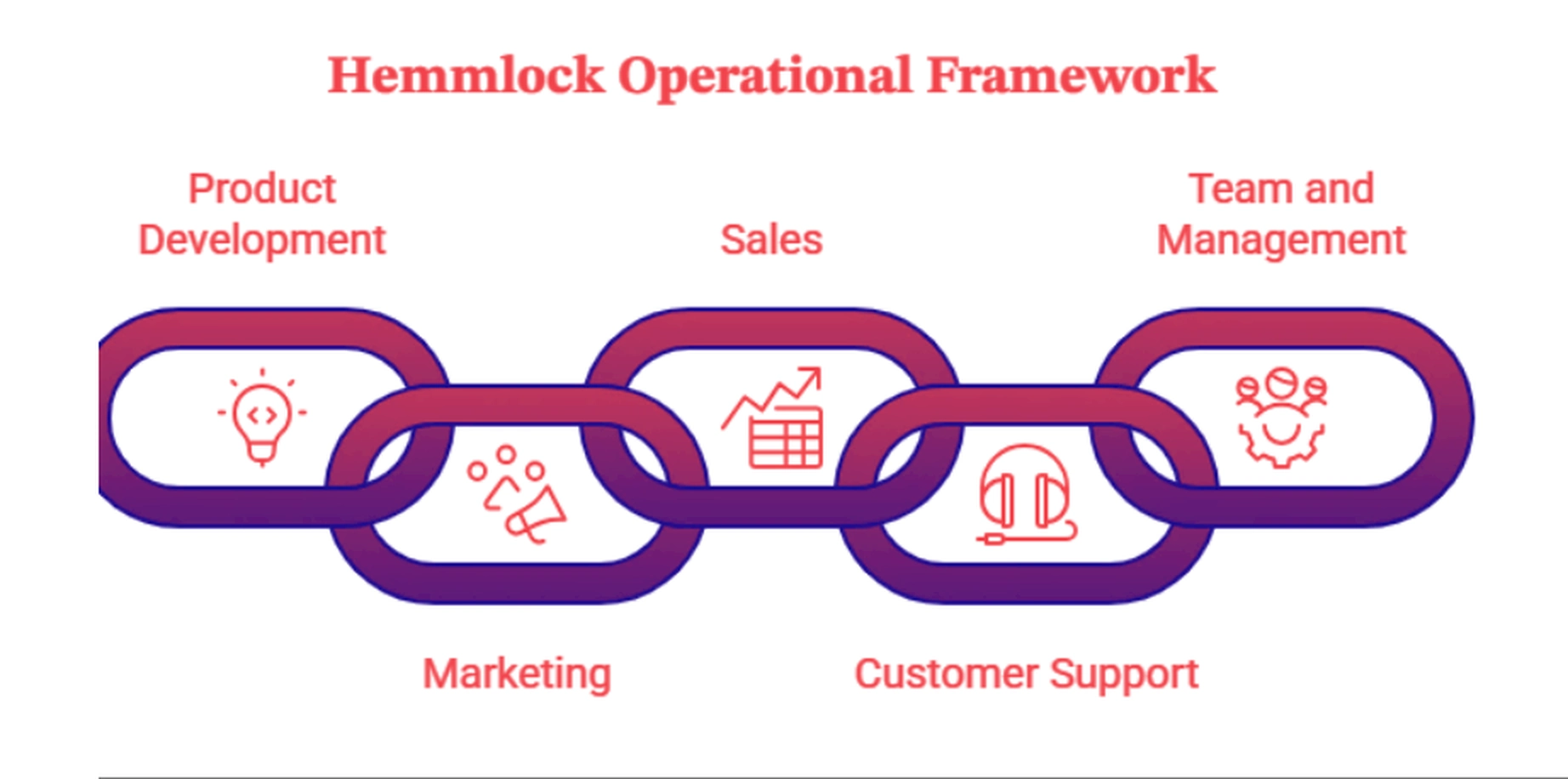
As a business grows, its operations become more structured — what may once have been managed by a few people can eventually require specialized teams, technology, and systems.
Product or Service Development
A company needs to continuously monitor customer feedback, market trends, competitor activity, new technology, and product performance, since continuous improvement helps a company remain relevant.
Marketing
Marketing brings customers to the business. Modern companies can use platforms like Instagram, Facebook, YouTube, Google, along with SEO, email marketing, influencer marketing, paid advertising, and content marketing — the exact mix depends on the industry and target audience.
Sales
Once customers become interested, the sales process converts that interest into revenue, through websites, physical stores, sales representatives, marketplaces, social media, distributors, and business partnerships, and a strong sales process makes it easy for customers to understand the offering and complete a purchase.
Customer Support
The relationship doesn’t end after a purchase. Customer support helps solve problems, answer questions, collect feedback, handle complaints, and maintain trust — becoming an important source of customer loyalty.
Team and Management
A growing company needs people across management, marketing, sales, operations, finance, technology, customer support, and HR — together, these functions allow the business to operate efficiently and prepare for future growth.
Hemmlock’s Growth and Expansion
Growth is one of the clearest indicators of business development — but it isn’t simply about earning more money. A company can grow by increasing its customer base, entering new markets, expanding its product range, hiring employees, increasing brand awareness, developing new distribution channels, or improving operational efficiency.
Major Growth Areas
| Period | Major Development |
|---|---|
| Early Stage | Business concept and initial development |
| Growth Stage | Increasing customers and market presence |
| Expansion Stage | Development of new products, services, or markets |
| Scaling Stage | Strengthening operations and team |
| Current Stage | Present business position and market presence |
| Future | Planned opportunities and potential expansion |
Expansion Strategy
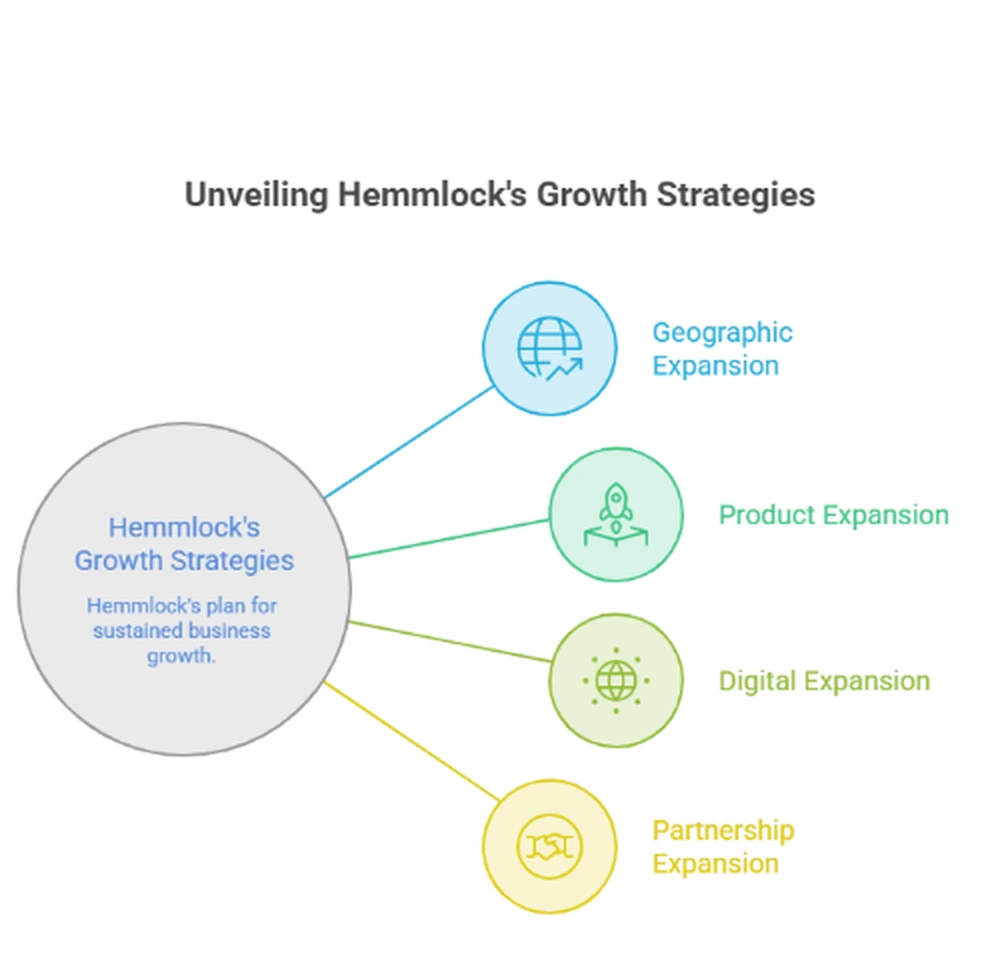
- Geographic Expansion — entering new cities, states, or countries to reach a larger customer base
- Product Expansion — introducing new products or services for existing customers
- Digital Expansion — building a strong online presence through websites, social media, and e-commerce
- Partnership Expansion — strategic partnerships that accelerate growth faster than building everything internally
For Hemmlock, continued growth will depend on maintaining the quality and customer experience that helped build the business while developing the systems required to operate at a larger scale.
Marketing and Brand Strategy
A company is more than its product — a strong brand creates recognition, trust, and emotional connection. For a growing company like Hemmlock, branding and marketing play a major role in attracting new customers and retaining existing ones.
Understanding the Customer
Effective marketing begins with understanding the customer. Instead of communicating with everyone, a brand should identify its ideal customer and create messages specifically for that audience.
Digital Marketing
Hemmlock can use digital platforms for brand awareness, product education, customer engagement, lead generation, sales, and customer retention.
Social Media
A strong social-media strategy can include educational content, product demonstrations, customer testimonials, behind-the-scenes content, founder stories, short-form videos, customer-generated content, and promotional campaigns. The goal shouldn’t simply be collecting followers — it should be creating meaningful attention that builds brand trust.
Content Marketing
Blogs, videos, guides, case studies, and social posts can answer customer questions while naturally introducing Hemmlock’s products, continuing to attract visitors long after publishing.
Search Engine Optimization
SEO can help Hemmlock appear when potential customers search for relevant topics, focusing on relevant keywords, search intent, helpful articles, internal linking, quality content, technical performance, mobile usability, and page speed. The goal isn’t just ranking on Google — it’s bringing the right audience to the business.
Future Vision and Lessons for Entrepreneurs
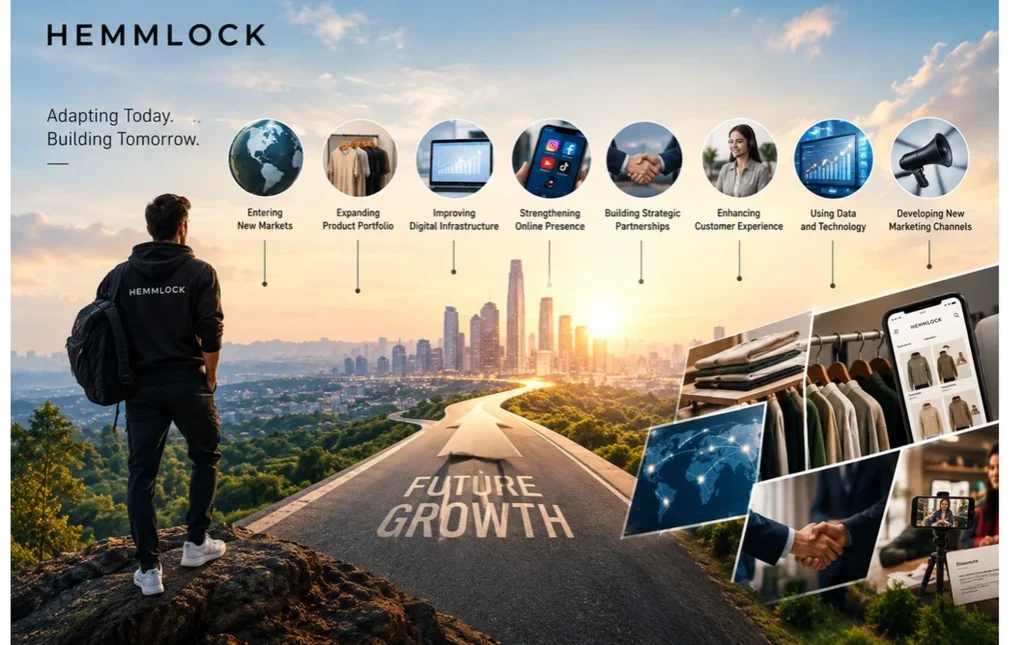
The future of any company depends on its ability to adapt. Markets that exist today may look very different in the coming years — technology, consumer behavior, AI, social media, e-commerce, and changing economic conditions are all influencing how businesses operate. For a growing brand, recognizing these changes early can create new opportunities, including entering new markets, expanding the product portfolio, improving digital infrastructure, strengthening online presence, building strategic partnerships, improving customer experience, using data and technology, and developing new marketing channels.
Lessons Entrepreneurs Can Learn
- Start With a Problem — Businesses become stronger when they solve a genuine customer problem.
- Customer Trust Matters — A strong relationship with customers can become one of a company’s biggest competitive advantages.
- Growth Requires Systems — A business that grows without building the right systems can struggle to maintain quality.
- Marketing Is Essential — A great product needs visibility; customers can’t choose what they don’t know exists.
- Adaptation Is Necessary — Customer preferences, competitors, technology, and market conditions continuously change.
- Leadership Matters — A clear vision helps teams understand where the company is going.
- Long-Term Thinking Wins — Building a sustainable company is generally more valuable than chasing short-term results.
Conclusion: The Journey of Hemmlock
The story of Hemmlock is ultimately a story about the journey of building a business. Every company begins somewhere — what separates a business that simply survives from one that continues to grow is its ability to understand customers, respond to challenges, develop strong operations, build trust, and continuously improve.
From its initial idea to its developing business operations, Hemmlock’s journey demonstrates the different stages of building a company — identifying an opportunity, creating a product, establishing a brand, attracting customers, managing operations, and planning for future growth. The people behind the company are equally important: the founder provides the original vision, while leadership and the wider team transform that vision into day-to-day business operations.
The most interesting part of a business story is not simply where the company is today — it is how it got there. The challenges faced during the early stages, the decisions made at important turning points, the customers who supported the business, and the strategies used to achieve growth all contribute to the company’s identity.
As Hemmlock moves forward, its ability to innovate, understand its customers, strengthen its brand, and adapt to changing market conditions will be important to its future success. For aspiring entrepreneurs, the biggest lesson is simple: a successful business is not created by one decision — it is built through hundreds of decisions made consistently over time.
Hemmlock’s journey is therefore not just a story about a company. It is a story about vision, execution, resilience, customer value, and the continuous pursuit of growth. And the most important chapter may still be the one yet to be written.
Frequently Asked Questions About Hemmlock
What is Hemmlock?
Hemmlock is a clothing brand built around its products, style, and customer-focused approach.
When did Hemmlock start?
Hemmlock started with a simple business vision and gradually grew through consistent work and customer trust.
What does Hemmlock offer?
Hemmlock offers clothing and fashion solutions designed to meet the needs of its target customers.
How has Hemmlock grown?
The business has grown by focusing on quality, customer needs, and continuous improvement.
What makes Hemmlock different?
Its focus on customers, quality, and building long-term trust helps Hemmlock stand out.
What is the future of Hemmlock?
Hemmlock aims to continue growing, improving its offerings, and reaching more customers.